What choosing Nanjing changes
Nanjing brings together Ming imperial remains, one of China's leading museums, republican-era history, the Qinhuai riverfront, Purple Mountain, and difficult twentieth-century memory. For the Planner, treat three to four days as the working allocation and use “Nanjing Museum and republican-era context” as the first fixed block.
Few cities offer such a clear physical sequence from ancient capital to modern nation, and the surviving walls, broad avenues, campuses, lakes, and memorial landscapes make that history spatially legible. The constraint that changes this route is practical: The historical range can feel emotionally and physically demanding, and Purple Mountain sights are too dispersed to combine casually with the southern old city.
See & do
Landmarks & experiences
Pair the former capital's walls and museum collections with an evening by the Qinhuai.
Suggested time on site. Transfers and queues are extra.
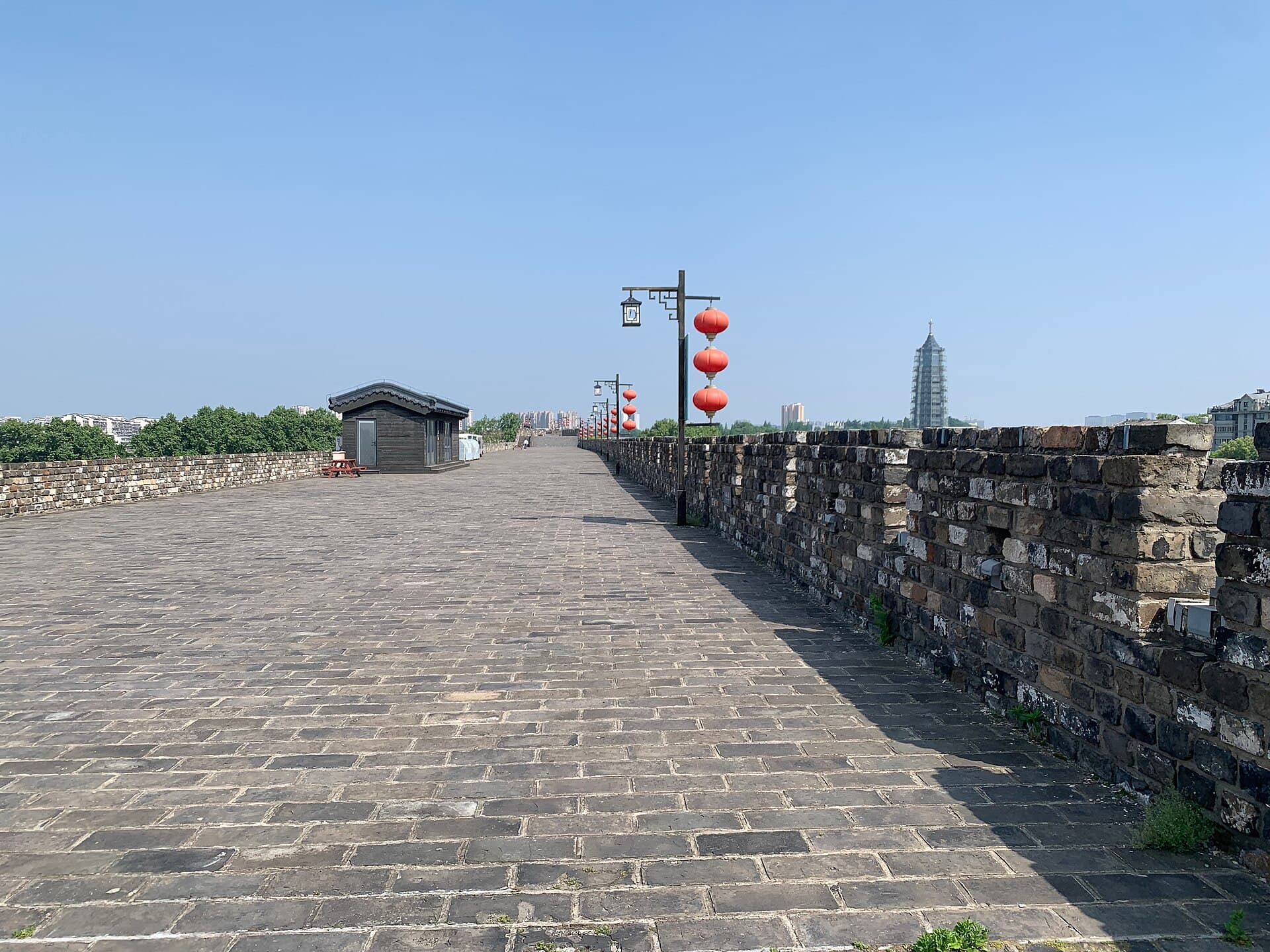
Ming City Wall
Walk a surviving section of the capital's brick defenses.
1-2 hrCityZhonghua Gate, Qinhuai DistrictNanjing Museum
Trace Jiangsu history through archaeology, ceramics and decorative arts.
2-4 hrCityZhongshan East Road, Xuanwu DistrictConfucius Temple and Qinhuai River
Browse riverside lanes, bridges and the old examination district.
1.5-3 hrCityFuzimiao, Qinhuai District
Check museum reservations and choose one wall section.
Food
Local dishes & food streets
Duck, clear broths and crisp dumplings anchor Nanjing's mostly gentle flavors.
Salted duck
Tender brined duck, usually served cool and chopped on the bone.
Duck blood vermicelli soup
Clear broth with vermicelli, duck blood curds and often offal.
Pan-fried beef dumplings
Juicy beef filling under a browned, crisp base.
Where to eatTry Laomendong for snacks and streets around Fuzimiao for duck dishes.
Duck soup often includes blood and organs; ask before ordering if either is unsuitable.
Stay
Neighborhoods & trade-offs
| Area | Why stay here | The trade-off |
|---|---|---|
| Xinjiekou | Metro connections and a wide choice of restaurants. | Busy shopping streets offer less historic atmosphere. |
| Fuzimiao | Walk to Qinhuai lanes, snacks and evening river views. | Crowds and evening noise; choose a room away from the main lanes. |
Transport
Arrival & getting around
- Getting in
- Lukou Airport and Nanjing South Station have metro links; check the station name on your train ticket.
- Around the city
- Use the metro between districts, then walk. Wall entrances and museum gates are separate destinations.
Transfer times are not yet verified. Check door-to-door timings for your exact airport, station or day-trip route.
Budget
Rooms, meals & transport
| Expense | What to budget for |
|---|---|
| A room for two | Metro-linked hotels away from Qinhuai waterfront streets tend to offer better value. |
| Meals | Noodles and dumplings keep meals modest; full duck dishes suit sharing. |
| Local transport | Metro and walking limit spending; Purple Mountain car trips add to the total. |
Based on two adults sharing a standard double room, three meals and local transport. Admission, intercity travel, airport transfers and personal spending are extra. Check hotel rates for your travel dates before setting a daily budget.
Allow separately for wall entry, special exhibitions and optional Qinhuai boat rides.
When to go
Weather & crowds
- Jan
- Feb
- Mar
- Apr
- May
- Jun
- Jul
- Aug
- Sep
- Oct
- Nov
- Dec
March-April and October-November suit wall walks and museum days.
Summer is hot and humid; rainy spells make exposed wall walks less appealing.
Essentials
Preparation & local advice
- English & navigation
- Metro and high-speed rail are well structured, and major museums provide useful interpretation, but English depth varies at smaller historic sites. Before adding “Nanjing Museum and republican-era context,” save the Chinese names used in that route and the full address of the return station or hotel; that is the useful language input for this particular plan.
- Before you go
- Use the full English museum name on maps: Nanjing Museum and Nanjing City Museum are different institutions.
- On the ground
- Keep memorial visits unhurried and follow photography rules at solemn sites.
Make time for Nanjing.
3-4 days, at your pace.
A 4-day itinerary
A 4-day Nanjing itinerary
Nanjing Museum and republican-era context
Make Nanjing Museum the anchor, then add a nearby republican-era street, campus, or central neighborhood instead of forcing a distant second monument. For “Nanjing Museum and republican-era context,” keep Day 1 as the fixed block and add another reservation only when its local transfer and likely meal stop fit the same district.
Purple Mountain's monuments and landscape
Begin early for the Sun Yat-sen Mausoleum area and choose supporting sites according to walking ability, weather, and current shuttle operations. For “Purple Mountain's monuments and landscape,” keep Day 2 as the fixed block and add another reservation only when its local transfer and likely meal stop fit the same district.
Ming wall, old south, and Qinhuai
Explore Zhonghua Gate and a connected wall section, continue through Laomendong, and see the Qinhuai district after daylight crowds ease. For “Ming wall, old south, and Qinhuai,” keep Day 3 as the fixed block and add another reservation only when its local transfer and likely meal stop fit the same district.
Modern memory and a flexible finish
Visit the Memorial Hall of the Victims in Nanjing Massacre with respect, then leave the rest of the day light and adaptable. For “Modern memory and a flexible finish,” keep Day 4 as the fixed block and add another reservation only when its local transfer and likely meal stop fit the same district.
Questions about Nanjing
How many days do I need in Nanjing?
Allocate 4 days. Day 1 should cover this exact block: Make Nanjing Museum the anchor, then add a nearby republican-era street, campus, or central neighborhood instead of forcing a distant second monument. Add modern memory and a flexible finish only on Day 4; do not steal time from the first block to fit it.
What is the best time to visit Nanjing?
March to April and October to November usually support the best balance of wall walks, hill visits, and museum days. For this 4-day version, keep “Nanjing Museum and republican-era context” on the clearest suitable day: Make Nanjing Museum the anchor, then add a nearby republican-era street, campus, or central neighborhood instead of forcing a distant second monument.
Is Nanjing manageable without speaking Chinese?
Metro and high-speed rail are well structured, and major museums provide useful interpretation, but English depth varies at smaller historic sites. On Day 1, save the Chinese names for “Nanjing Museum and republican-era context” before leaving the hotel: Make Nanjing Museum the anchor, then add a nearby republican-era street, campus, or central neighborhood instead of forcing a distant second monument.
Where is the best area to stay in Nanjing?
Xinjiekou offers the easiest transport hub, while Confucius Temple or Laomendong suits travelers who value an atmospheric evening base over maximum network convenience. For this 4-day route, test the door-to-door trip from that base to “Nanjing Museum and republican-era context” before booking.
Sources & editorial notes
- Nanjing Foreign Affairs Office: City Wall
City Wall history and Zhonghua Gate setting only; no admission, duration or hotel verification. Checked 2026-08-31.
- ChinaTravel.tools editorial city dataset
Maintained editorial scoring and practical city-planning notes for travelers.
- Nanjing Municipal Bureau of Culture and Tourism
Official destination information for Nanjing's museums, historic sites, walls, and scenic areas.