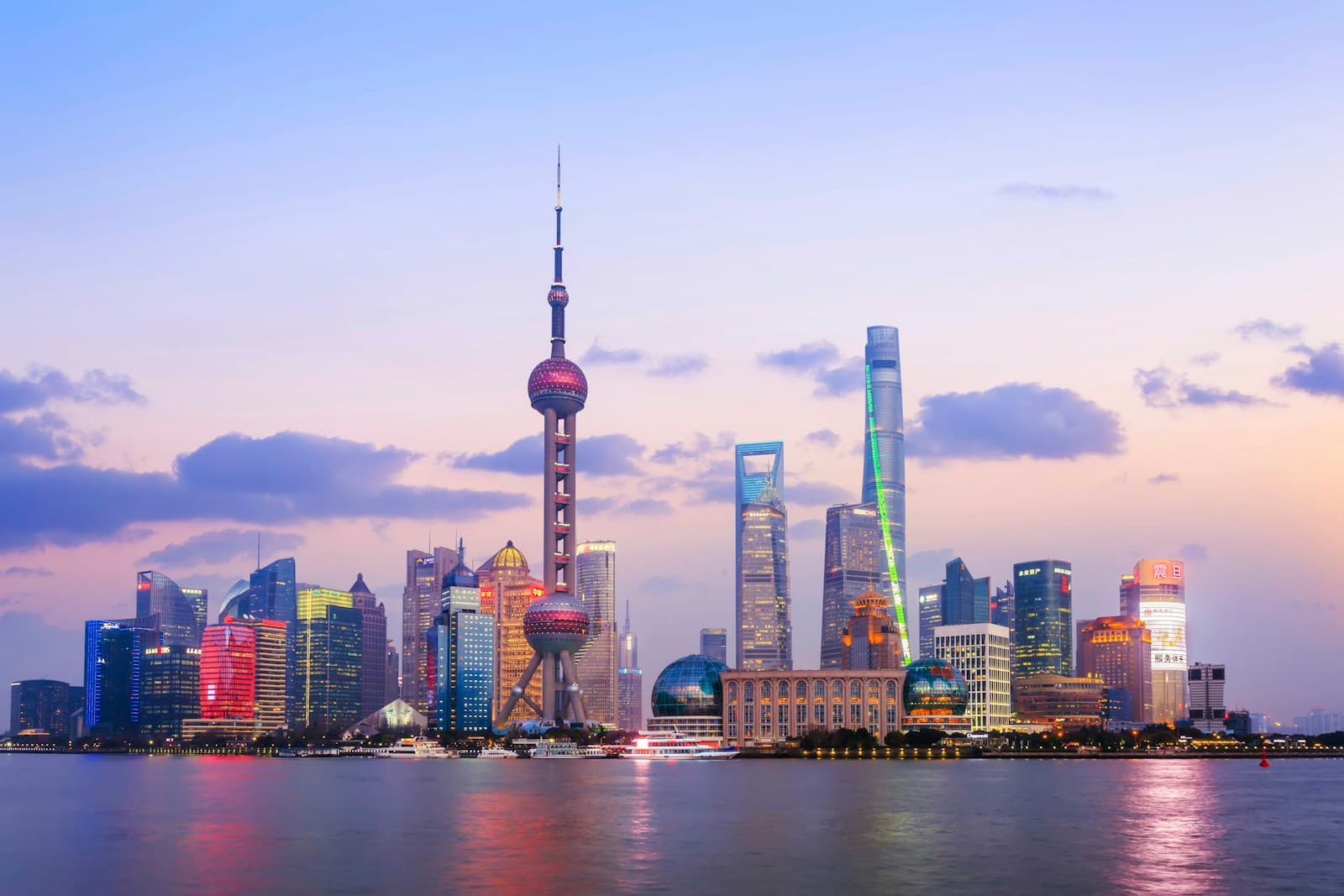
What choosing Shanghai changes
Shanghai is an especially convenient base in China for travelers who want efficient transport, a broad range of hotels, and an urban environment that feels internationally connected. Its appeal is not a single ancient monument. The city works through contrasts: the Bund faces Pudong's vertical skyline, leafy former concession streets meet dense commercial avenues, and traditional snacks sit beside polished contemporary dining. A visit makes most sense when you explore those layers by neighborhood instead of treating Shanghai as a race between observation decks and shopping streets.
Three to five days is enough to understand the center at a comfortable pace and add a museum, art district, food exploration, or nearby water-town experience if desired. Shanghai is more expensive than the inland cities in this guide, but the metro keeps movement affordable and local meals can balance a higher hotel budget. It is a particularly good choice when language anxiety is shaping your decision: English support is still inconsistent, yet signs, transport, and visitor-facing services tend to be easier to navigate than in many other cities.
See & do
Landmarks & experiences
Pair the Huangpu waterfront with a classical garden and leafy residential streets.
Suggested time on site. Transfers and queues are extra.
The Bund
Stroll beside historic waterfront buildings with Pudong's towers across the river.
1-2 hrCityHuangpu, west bank of the Huangpu RiverYuyuan Garden
Explore rockeries, ponds and pavilions inside the old city's classical garden.
1-1.5 hrCityHuangpu, beside the City God TempleWukang Road walk
Look for historic apartment blocks and lane houses, with a cafe stop along the way.
1.5-2.5 hrCityXuhui, around Wukang and Anfu roads
Yuyuan Garden and its surrounding shopping lanes are separate; respect residential entrances on Wukang Road.
Food
Local dishes & food streets
Shanghai cooking favors savory-sweet sauces, dumplings and simple noodle lunches.
Soup dumplings
Thin steamed wrappers hold pork and hot broth; some versions also contain crab.
Pan-fried pork buns
Juicy pork buns with crisp bases, often finished with sesame and scallions.
Scallion-oil noodles
Wheat noodles tossed with fragrant scallion oil and a dark soy sauce dressing.
Where to eatHuanghe Road suits a central dumpling stop; Zhapu Road offers noodle and snack shops north of Suzhou Creek.
Dumpling broth can be very hot. Confirm pork, shellfish and sesame ingredients; a plain-looking noodle dish may still contain animal fat.
Stay
Neighborhoods & trade-offs
| Area | Why stay here | The trade-off |
|---|---|---|
| People's Square | A central metro base for the Bund, old city and trips across the river. | Busy shopping streets and larger roads make some blocks noisy. |
| Jing'an Temple | Hotels, restaurants and metro connections suit days split between neighborhoods. | Rooms can be costly, and the Bund still needs a separate journey. |
Transport
Arrival & getting around
- Getting in
- Pudong Airport, Hongqiao Airport and Hongqiao Station connect to urban rail; check which gateway your ticket names.
- Around the city
- Use the metro across districts and the river. Walk individual neighborhoods; distances between the Bund, Yuyuan and Xuhui add up.
- Beyond the city
- Suzhou and Hangzhou are rail options; check both departure and arrival stations before planning a same-day return.
Transfer times are not yet verified. Check door-to-door timings for your exact airport, station or day-trip route.
Budget
Rooms, meals & transport
| Expense | What to budget for |
|---|---|
| A room for two | Bund views and central upscale hotels command a premium; compare rooms around a metro stop without a river view. |
| Meals | Dumpling and noodle shops keep meals modest; cafe stops, cocktails and skyline dining add up. |
| Local transport | Metro travel limits local spending. Allow separately for airport journeys and intercity trains. |
Based on two adults sharing a standard double room, three meals and local transport. Admission, intercity travel, airport transfers and personal spending are extra. Check hotel rates for your travel dates before setting a daily budget.
Set aside money for garden entry, special exhibitions or an observation deck; a waterfront walk offers another skyline perspective.
When to go
Weather & crowds
- Jan
- Feb
- Mar
- Apr
- May
- Jun
- Jul
- Aug
- Sep
- Oct
- Nov
- Dec
April-May and October-November usually suit neighborhood walks and riverfront evenings.
Summer brings humid heat and heavy rain; winter can feel damp. Choose skyline outings around the short-range forecast.
Essentials
Preparation & local advice
- English & navigation
- Shanghai has some of the strongest English comfort in the city collection, particularly at airports, major stations, central hotels, museums, and popular visitor attractions. That does not mean every taxi driver, restaurant, or neighborhood shop uses English. Save addresses in Chinese, install a translation tool, and learn how to show your destination clearly. The metro is usually the easiest default because route information is structured and station names are consistent. International services are common in central districts, but the trip becomes more rewarding when you are prepared to enter local places where communication relies on menus, gestures, and a little patience.
- Before you go
- Save addresses in Chinese, including any museum branch name; venues on opposite sides of the river can share a name.
- On the ground
- Lane-house entrances are often private homes. Photograph from public streets and keep narrow pavements clear.
Make time for Shanghai.
3-5 days, at your pace.
A 4-day itinerary
A 4-day Shanghai itinerary
The Bund, old trading streets, and skyline views
Start on the west side of the Huangpu River and walk part of the Bund while you still have energy to notice the historic façades. Continue into nearby streets rather than remaining only on the promenade; the shift from monumental riverfront buildings to busy local blocks gives the day texture. Return to the waterfront near dusk if visibility is good, or cross toward Pudong for a closer look at the skyline. Treat any observation deck as an optional weather-dependent choice, not the sole purpose of the day.
Former French Concession neighborhoods
Build the second day around one or two adjacent former concession neighborhoods. Walk slowly through tree-lined streets, small commercial lanes, historic residences, parks, and contemporary shops. The point is the urban fabric, so leave room to stop rather than following an overfilled landmark list. Add a focused museum, former residence, or food market that matches your interests. In the evening, choose a restaurant near the day's final area so you experience the neighborhood after work hours instead of spending another long transfer underground.
Museums, gardens, and the old city
Use day three to add historical context. Select one major museum and give it enough time, then pair it with the old-city area or a classical garden if current access suits your plan. Crowds and commercial streets can change the atmosphere, so focus on architecture, spatial contrast, and a few intentional stops. This is also a good day for a structured food route: sample dumplings, noodles, or local breakfast dishes in manageable portions rather than queuing for every famous shop mentioned online.
Contemporary Shanghai or an easy regional add-on
A fourth day can stay contemporary with an art district, design-focused neighborhood, riverside walk, or deeper exploration of Pudong. Alternatively, use Shanghai's rail connections for a carefully planned nearby excursion, while remembering that this guide treats Shanghai itself as the base. If you have only three days, skip this layer rather than compressing the core route. With a fifth day, repeat the kind of experience you enjoyed most and leave time to navigate the station or airport without turning departure into a final sprint.
Questions about Shanghai
Is Shanghai a good city for an independent trip?
A 4-day independent plan is realistic: the metro connects the Bund, People's Square and the former French Concession, while Chinese addresses remain useful for small restaurants and lane-house stops.
How many days do I need in Shanghai?
Choose 4 days: pair the Bund with Nanjing Road, give the former French Concession its own walking day, reserve 1 museum-and-garden day, and leave Day 4 for Pudong or a rail side trip.
Which Shanghai district is best for visitors?
For 4 nights, People's Square is the practical transfer base; the former French Concession is the better choice when cafés and evening walks matter more than the shortest ride to the Bund.
Can I manage Shanghai without speaking Chinese?
The 4-day central route is manageable in English at Pudong Airport and metro stations, but save the Chinese name of every restaurant before walking Wukang Road or crossing into smaller lane-house streets.
Sources & editorial notes
- Shanghai municipal government: Scenic Spots
The Bund's historic waterfront, Yuyuan's garden setting and Wukang Road's residential architecture; not opening hours or prices. Checked 2026-08-31.
- ChinaTravel.tools editorial city dataset
Maintained editorial scoring and practical city-planning notes for travelers.
- Shanghai Municipal Government — four-season weather guide
Official seasonal context for plum rain, summer heat, typhoon exposure and damp winter conditions.